ServicesBattery Storage
Battery Storage in Addison
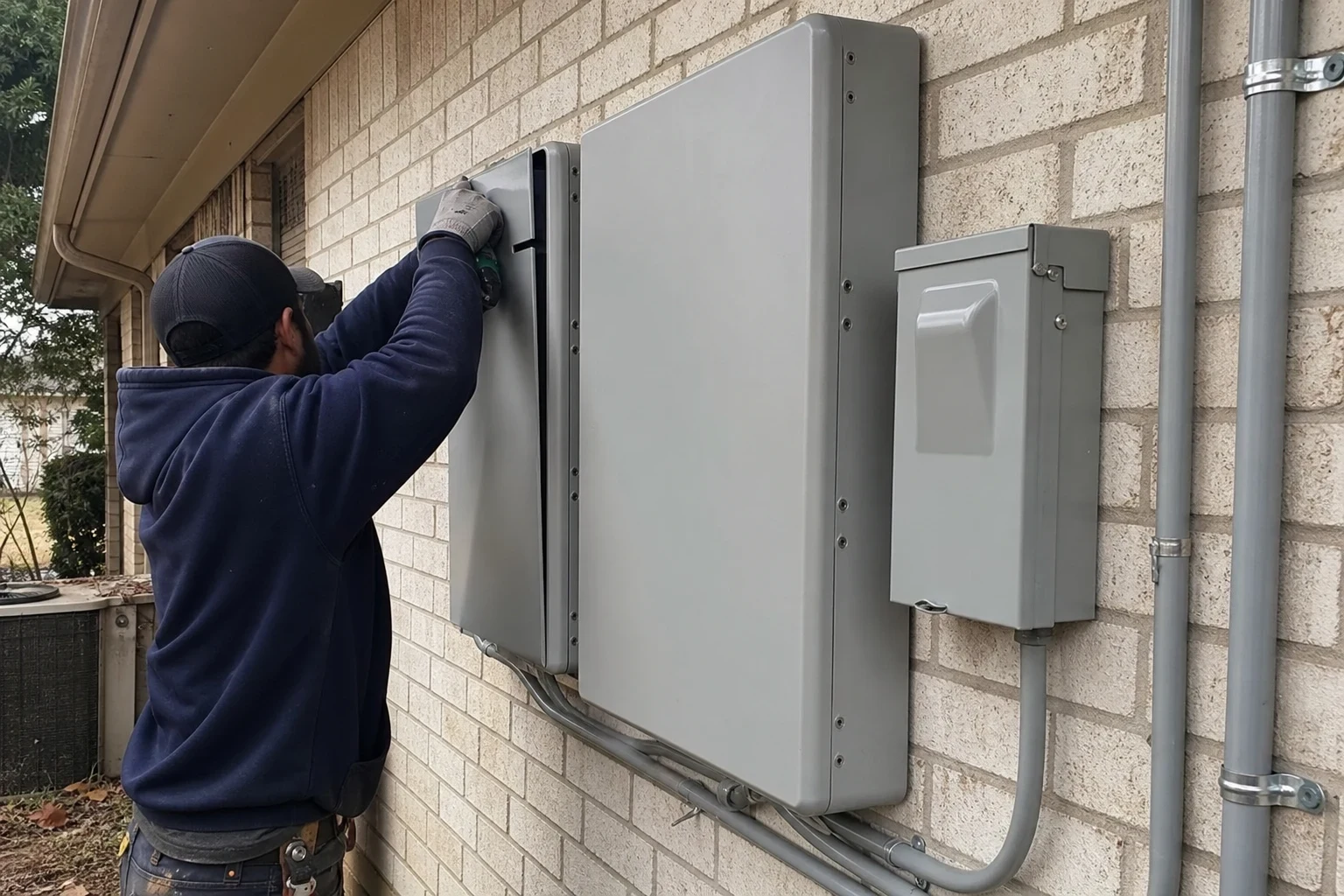
A home battery stores the power your panels make so you can use it after sunset or during an outage. We size the system to the circuits you actually depend on, handle the permit and inspection, and one person stays your contact from the first question to cleanup.
Why Homeowners Add a Battery
When the grid fails, panels without storage switch off by design, so no power travels back onto lines where crews may be working. Add a battery and the right gear, and your house disconnects from the grid in an outage and runs on what is stored plus what the panels are making.
Storage also keeps more of your solar at home. The surplus your panels make in the afternoon goes into the battery instead of out to the grid, and you draw on it after dark while the AC is still running.
Some homes are better off without one, and we will say so. If lower bills are the main goal and outages are rare where you live, panels by themselves may give you more for the money. If losing power worries you, a family member uses medical equipment, or you want to ride out summer storms and the odd winter freeze, a battery deserves a closer look.
What You Get With Our Battery Work
- 01
Sizing based on your list
First we ask what has to stay on when the power drops, such as the fridge, lights, Wi-Fi, a well pump or one AC unit. Your answers decide the battery size, not a sales quota.
- 02
A backup panel for key circuits
Most homes get their own backup panel that feeds the circuits that matter most. Covering the whole house can be done, but it generally needs more storage, and we lay out that tradeoff in plain terms.
- 03
A spot that handles Texas heat
Batteries only tolerate so much heat, and a garage wall facing west in August can push past it. We choose a location with shade and air movement and keep the clearances the code and manufacturer call for.
- 04
Works with panels new or old
We can connect a battery to the panels on your roof now, or put in both at once along with our solar panel installation. Before you commit, we confirm your inverter and other equipment are compatible.
- 05
Permit, inspection and utility forms
We pull the electrical permit and meet the city inspector on site when the work is reviewed. We also file the interconnection application your utility asks for, so every sign-off is done before the system goes live.
- 06
App setup and a demo
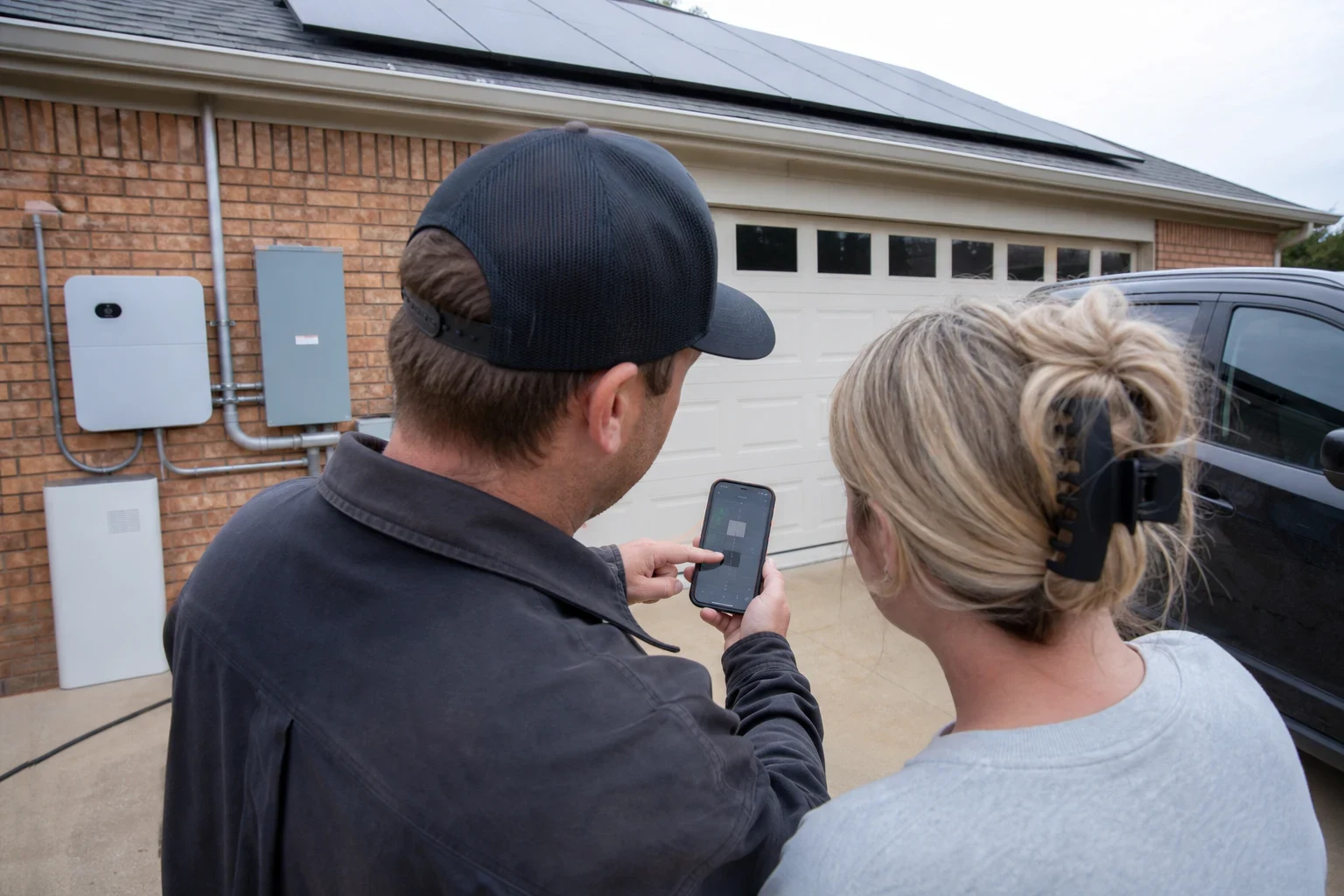
On our way out, we put the monitoring app on your phone and walk you through backup mode, so you already know how it works when the first outage comes.
Questions about Battery Storage?
Call(972) 810-3210Signs a Battery Makes Sense for You
Outages leave you scrambling
If storms knock your power out and you are packing coolers or checking on the freezer, stored power keeps those essentials running without a generator to fuel.
Your panels go dark when the grid does
Many solar owners are surprised the first time an outage hits a sunny day and the system shuts off. A battery with backup equipment fixes that.
You send most of your solar away
If your panels produce plenty at midday but your bills stay high in the evening, storing that power for later can stretch what your system is worth to you.
Someone at home depends on power
Oxygen concentrators, refrigerated medicine and home office equipment all need steady electricity. A battery sized for those circuits gives you a dependable backup plan.
You are planning solar anyway
Adding storage during the original install often means one permit, one inspection and less wiring work than coming back later.
How a Battery Install Goes
- 1
A conversation by phone
You tell us what you want backed up and whether you already have solar. Your contact answers questions and sets up a visit to look at your electrical panel and where the battery could go.
- 2
Site visit and written estimate
We check your main panel, meter area and wall space, then write up the battery size, backup panel plan and line items. You get a clear explanation of what each piece does before deciding.
- 3
Permit and scheduling
We take care of the permit and the utility paperwork, then book an install day that works for you. Your contact calls with updates along the way, so you are never chasing anyone for answers.
- 4
Install day
Most installs take a day. The power is off for a few hours while we tie in the backup panel, and we tell you when so you can plan around it. The crew protects floors and walls and cleans up before leaving.
- 5
Inspection and switch-on
After the city inspection passes and the utility approves, we turn the system on, test backup mode and walk you through the app.
What Sets the Cost of Battery Storage
Two things drive most of the price: how much you want covered during an outage and the shape your wiring is in now. Each item appears on your written estimate so nothing is hidden. When a smaller system handles what matters to you, we will tell you.
- How much you store
- Each added unit raises the price. Keeping the fridge and lights on overnight needs much less storage than running central air.
- A few circuits or the full house
- Backing up a short list of circuits through a backup panel costs less than covering the whole house, which can call for added equipment to start big appliances.
- The main panel you have now
- A panel that is older or already full may need an upgrade before a battery goes in safely. We look at it during the site visit, so you hear about it early.
- The solar gear already on your home
- Certain inverters connect to a battery with no trouble, while others need extra parts. Putting in panels and storage at the same time can skip that expense.
- Where the battery goes
- Mounting the battery close to the main panel takes less conduit and fewer labor hours than putting it on a far wall or across the garage.
Home Battery Questions We Hear Often
During an outage, how long will a battery power my home?
It depends on what's running. The fridge, lights and Wi-Fi can often last overnight and longer, especially when the panels recharge the battery in the morning. Central air drains it much faster. We figure run time from the actual list of things you want kept on.
Will a battery work with the solar I already have?
Usually, yes. We look at your inverter and wiring first, because some systems hook up directly and others need added equipment. We tell you which case you're in before any work begins.
Do I need solar panels to use a battery?
No. A battery can charge from the grid and act as backup on its own. Without panels, though, it can't refill during a long outage, so most homeowners put in both.
Is it safe to put a battery in the garage?
Yes, home batteries are built for indoor or garage use when placed correctly. We follow the code and manufacturer rules for clearance and location, and we avoid spots that get too hot in summer.
Is there a tax credit for home batteries?
Incentives for batteries change over time and depend on your situation. We're glad to share what we know about current programs, but check with your tax professional to confirm what applies to you.
Talk Through Your Backup Plan
Tell us what you want running when the power goes out, and your contact will walk you through the options and the next step. If panel cleaning or solar repair would help first, we will mention that too.