ServicesPanel Cleaning
Addison Solar Panel Cleaning
Pollen, dust and bird droppings collect on your panels and slowly lower your system's output. We wash them by hand using purified water and soft brushes, measure output before and after, and give you one contact from your first call through the final rinse.
What panel cleaning does for your system
Solar panels make power from the light that reaches the cells. A film of dust or a few splotches of bird droppings blocks some of that light, and because panels are often wired together in strings, a heavily soiled section can drag down more than its own share. Rain helps, but a light shower usually just moves the grime around and leaves a dried ring at the bottom edge of each panel.
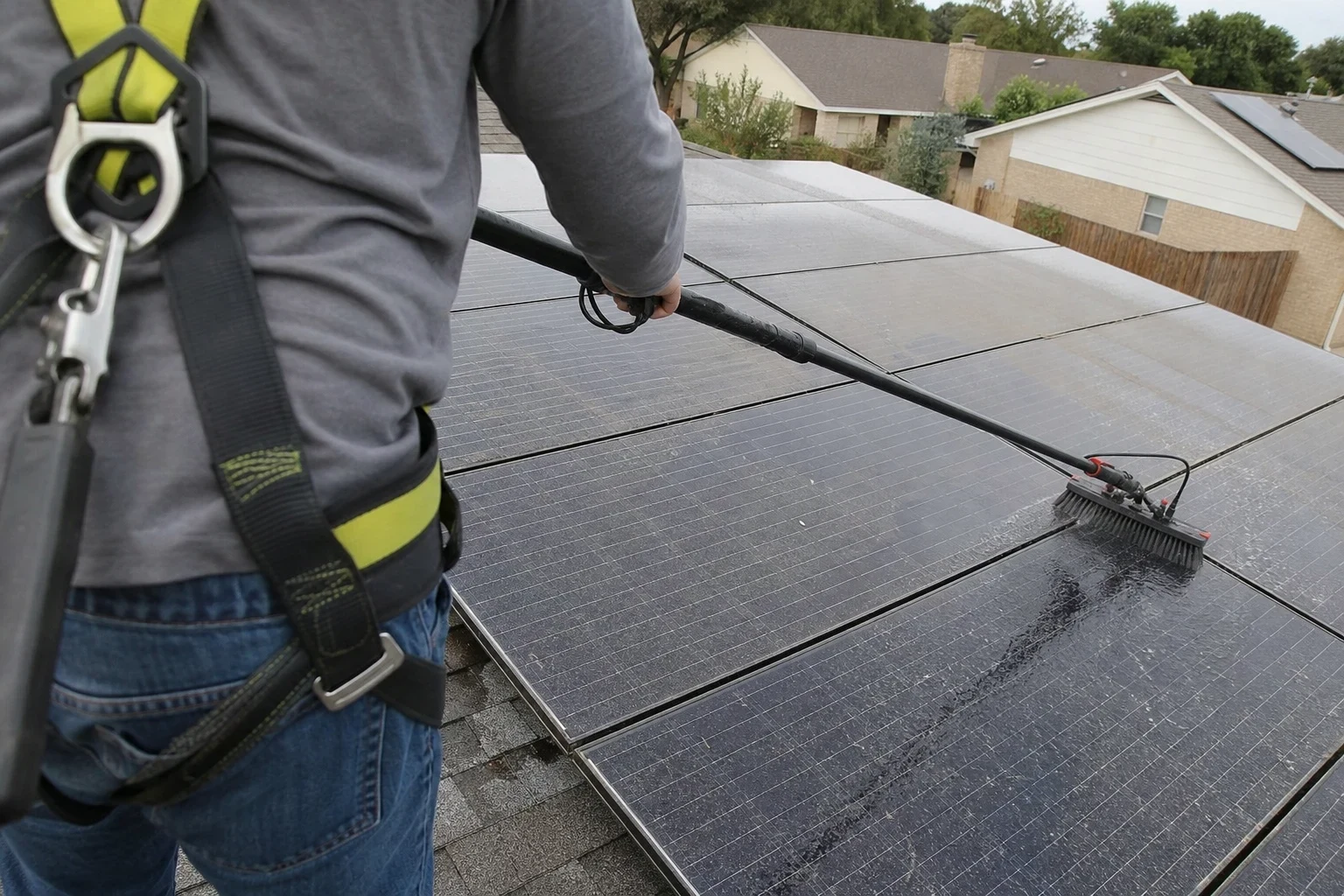
Our panel cleaning is a careful wash of the glass, done without pressure washers, harsh soap or anyone standing on the modules. The person you speak with when you first call is the same person who schedules the visit, answers your questions on the day and tells you what we saw. You will not get passed between departments to find out how it went.
What every cleaning visit includes
- Output reading before we start
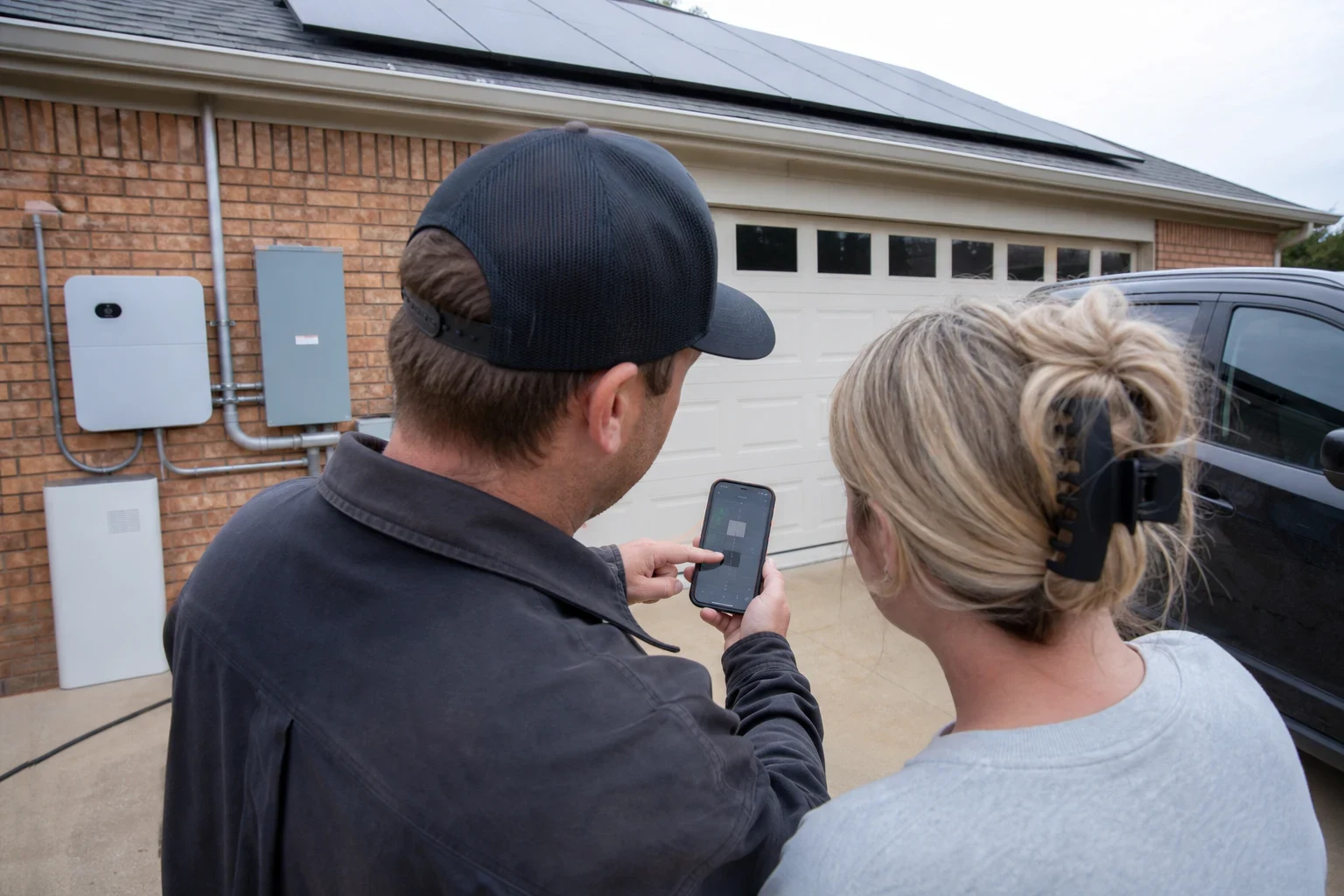
- We note what your inverter or monitoring app shows before cleaning. That gives you a real comparison afterward instead of a guess.
- Purified water and soft brushes
- We use deionized water, which dries without leaving mineral spots, and soft-bristle brushes made for solar glass. No abrasive pads, no degreasers and nothing that could wear the anti-reflective coating.
- Spot treatment for stubborn grime
- Bird droppings and baked-on pollen get a longer soak and gentle work rather than scraping. We take our time on the bottom edges, where dirt tends to collect.
- A visual check of the array
- While we are up there, we look for cracked glass, loose wiring, debris trapped under the panels and signs of animals nesting. If something needs attention, we show you photos and explain it plainly.
- Cleanup and a final reading
- We rinse runoff away from walkways, pick up anything we brought and check the output again. You get a short rundown of what changed and anything worth keeping an eye on.
Signs your panels are ready for a cleaning
Production has slipped on sunny days
If your app shows lower numbers than the same kind of clear day last year, soiling is one of the first things to rule out.
You can see a film from the ground
A dull, hazy look or a visible line of grime along the lower edge means light is being blocked.
Birds have found your roof
Droppings dry hard in the Texas sun and do not wash off in a normal rain. Even a few spots on one panel can lower the output of its whole string.
Spring pollen or a dry, windy stretch
After pollen season or weeks without real rain, panels often carry a yellow or gray coating that sits there until someone removes it.
It has been a year or more
Many systems never get cleaned at all. If you cannot remember the last time, a cleaning and a quick look is a sensible place to start.
What affects the price of a cleaning
We quote each cleaning after we hear about your system, so you know what to expect before we come out. A few things make the biggest difference, and we will talk through which ones apply to your home when you call.
Number of panels
More panels means more time on the roof. Larger arrays take longer to wash and inspect properly.
Roof height and pitch
A two-story house or a steep roof needs more safety setup and slower, careful work than a single-story roof with a gentle slope.
How dirty the panels are
A light coat of dust rinses off quickly. Years of buildup or heavy bird droppings take extra soak time and attention.
Access around the house
Tight side yards, landscaping and where ladders can safely stand all affect setup time.
How your cleaning visit goes
- 1
A conversation by phone
You tell us about your system, your roof and anything you have noticed. We give you a clear idea of the visit and set a time that works, usually early morning when the glass is cool.
- 2
Setup and safety
We arrive, confirm the plan with you and set up ladders and fall protection. We work from the edges and use extension poles so nobody walks on the panels.
- 3
Washing and inspecting
Each panel gets a gentle wash and rinse with purified water. As we go, we note anything that looks off and take photos.
- 4
Wrap-up with you
We compare the before and after readings, walk you through the photos and answer questions. If we spotted a problem, we explain whether it calls for solar repair or simply something to watch.
Common questions about cleaning panels
How often do solar panels need cleaning?
Around Addison, a cleaning every six to twelve months suits most systems. Good times to book are just after spring pollen has settled and near the end of the dry summer heat. Panels under trees or near a spot birds like may need it more often, and your monitoring app will show you when.
Is it fine to rinse them with my own hose?
Spraying them from the ground with a garden hose does some good. Tap water can leave mineral spots, though, and getting on the roof with a hose is how people get injured. Never use a pressure washer or household cleaners on them, because either can harm the glass coating or the seals.
Could cleaning void my panel warranty?
A gentle wash with purified water and soft brushes matches what manufacturers suggest. Problems come from pressure washers, rough tools and walking on panels, and we use none of them. If you like, keep your manufacturer's paperwork nearby and we can read through it with you.
How much will my output go up after a cleaning?
That depends on how much dirt was there. A light layer of dust may give a small gain, while heavy grime or bird droppings can make a clear difference. We record readings before and after so you can see the change on your own system.
Should I be home while you clean?
It is not required. We need a safe place to set up and access to the roof, and it helps to know where your inverter or monitoring app is. Plenty of customers like to be around at the end to look over the readings and photos with us.
Let more sun reach your panels
Tell us about your system and what you have noticed. One person will set up your visit, stay with the job on the day and walk you through the results.