ServicesSolar Panel Installation
Solar Panel Installation in Addison, TX
We design and install solar systems sized to how your home actually uses power. One person from our team is your contact from the first roof check to the final walkthrough, so you always know who to ask, what happens next and when the crew will arrive.
When Solar Is the Right Call for Your Home
Solar panel installation makes the most sense when three things line up: a roof with good sun exposure, a roof with plenty of life left, and electric bills high enough that making your own power pays off. We look at all of them before we suggest a system. If solar isn't a good fit for your home right now, we'll tell you.
Long summers with heavy air conditioning use are where a well-sized system earns its keep in North Texas. We start with a year of your actual usage, not a guess, and design around it.
From the estimate through permits, utility approval and cleanup, you deal with one person. That person knows your roof, your design and your schedule, so you never have to explain your project to someone new.
What Our Installation Includes
- Usage review and system sizing
- We read through twelve months of your electric bills to see when and how much power you use. Panel count and inverter choice come from those numbers.
- Roof and site assessment
- We check roof orientation, shade from trees and nearby structures, rafter spacing and the age of your shingles. If the roof needs work before panels go on, we tell you up front so you can plan it with your roofer first.
- Electrical panel check
- Your main service panel has to handle the new solar circuit. We look at its capacity and condition and explain clearly if anything needs to change.
- Permits and utility paperwork
- We pull the city permit, schedule inspections and file the interconnection application with your utility. You sign where needed, and we handle the back-and-forth.
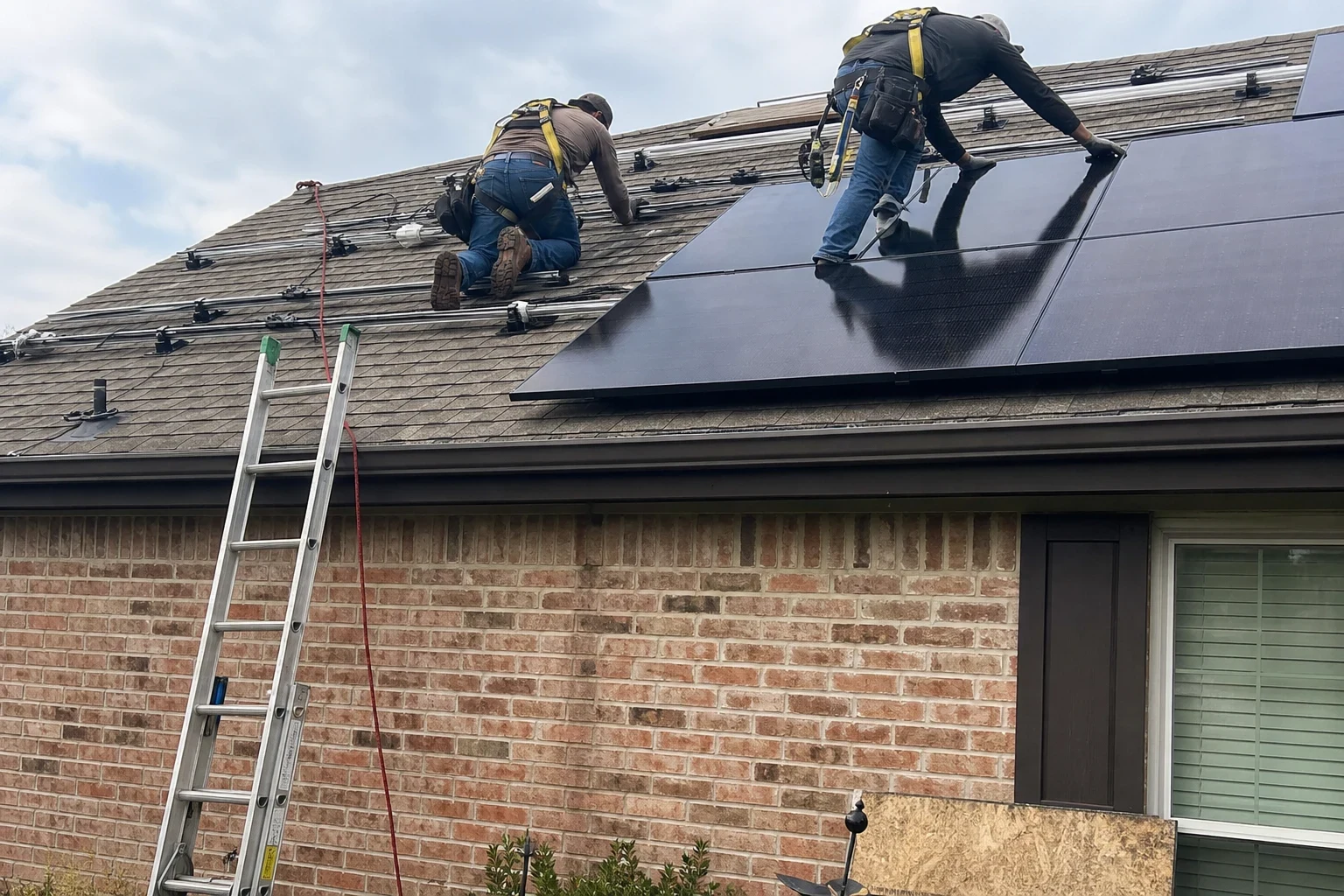
- Mounting, wiring and inverter
- Racking is anchored into rafters with flashed, sealed attachments. Conduit runs are kept tidy and as out of sight as the layout allows.
- Startup and monitoring setup
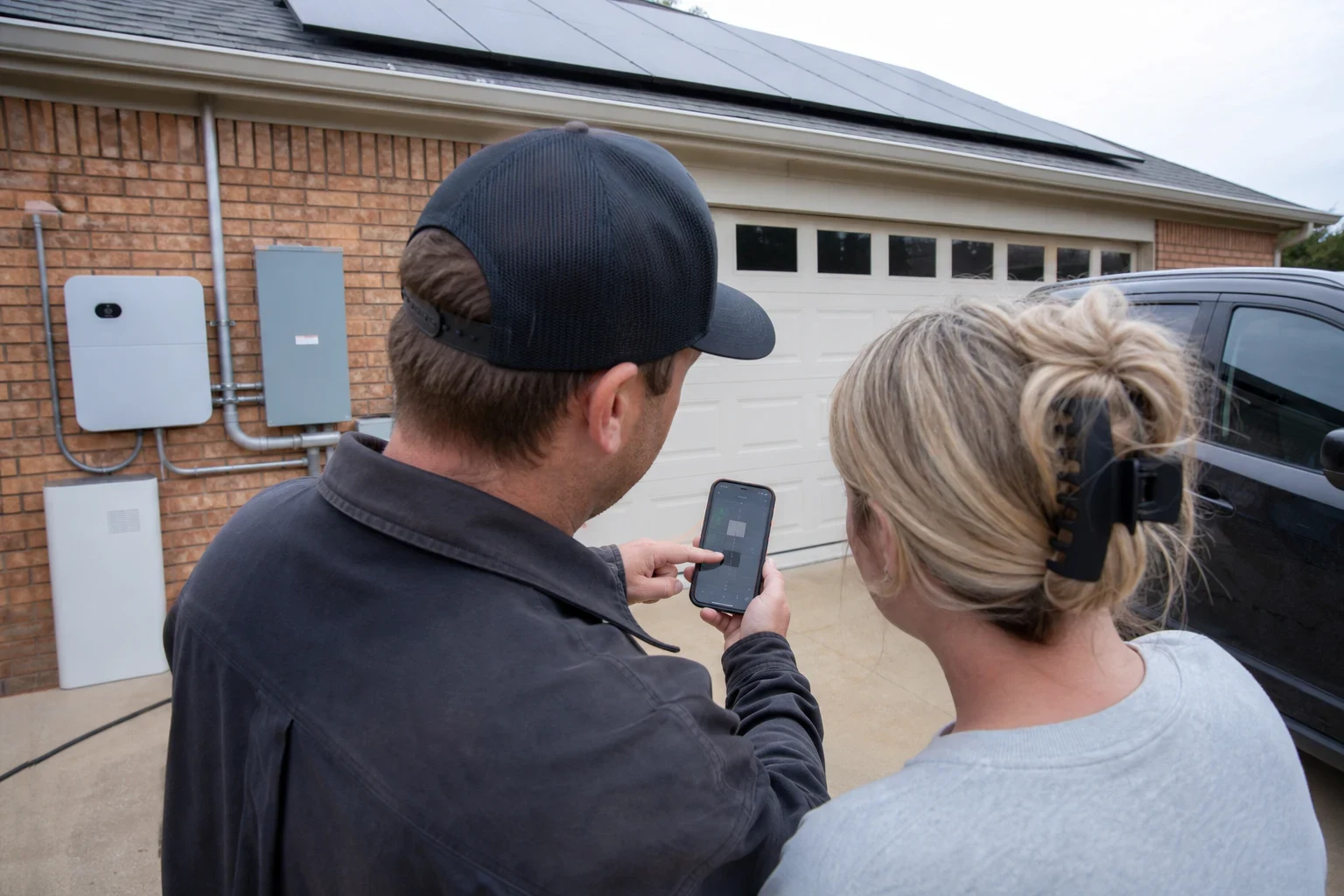
- Once the utility approves, we turn the system on, connect monitoring and show you how to check production from your phone.
Signs It's Time to Look at Solar
Summer bills that keep climbing
If your July and August bills are hard to swallow, solar production peaks during the same hot afternoon hours your cooling runs hardest.
A roof in good shape
Panels last for decades. Installing on a roof with years of life left means you won't need to remove the system for a reroof any time soon.
Open south- or west-facing roof space
Unshaded roof planes facing south or west collect the most sun through the day and give you the strongest output.
Plans to stay a while
Solar pays back over years, so the longer you expect to live in your home, the more of that return you keep.
Worry about outages
If losing power concerns you, an install is the right moment to plan for battery storage, even if you add the battery later.
What Drives the Price of Your System
We build each estimate from your own home's numbers, so neighbors on one street can get very different prices. The written estimate separates equipment, labor, permits and electrical work so every dollar is accounted for. These items have the biggest effect.
How big the system is
Adding panels raises both output and price. We match the size to what you really use, so you don't pay for production you'll never need.
The equipment you pick
Panel efficiency, a string inverter or microinverters, and your monitoring setup all affect cost. We lay out the pros and cons in everyday language.
Roof shape and slope
A steep roof, lots of small planes or tile take extra hours and special mounting parts.
Panel and wiring updates
If your main panel is older or out of space, it may need upgrading or a different hookup method before the system can connect.
Including a battery
Adding battery storage during the install costs more up front but saves you a second round of electrical work down the road.
How Your Installation Unfolds
- 1
Estimate and design
Your contact visits, measures the roof, reviews your bills and walks you through a written, line-item estimate with the system design. Ask anything you like. There's no pressure to decide that day.
- 2
Permits and approvals
We prepare the plans the city needs to review and handle the interconnection paperwork with your utility. Your contact updates you as each approval comes back, so the waiting never feels like a mystery.
- 3
Install day
Roof work usually takes a day or two, depending on system size. The crew protects plants and walkways below the work area and picks up debris before leaving each evening.
- 4
Inspection and permission to operate
The city inspects the finished work, then the utility updates your meter and approves the connection. We never switch a system on before that approval.
- 5
Final walkthrough
Your contact walks the property with you, confirms the site is clean and makes sure you're comfortable reading your monitoring app.
Questions About Getting Solar Installed
How long does it take from start to finish?
Putting the system up goes fast. Most of the wait is for permits and utility approval, which can run several weeks depending on your city and how busy the utility is. Your contact gives you an honest timeline at the estimate and checks in as each step is approved.
Can panels harm my roof?
Not if they go on the right way. Each attachment is set into a rafter, then flashed and sealed so water runs off. We look at the roof's condition first too, since mounting panels on worn shingles only sets up trouble later.
Where does the extra power go?
Across much of North Texas, what you're credited for power sent to the grid is set by your retail electricity plan, not by the company that owns the lines. Some plans pay for excess solar and others don't. We explain how buyback plans work so you can weigh your choices before the system goes live.
Can panels survive hail?
They have tempered glass and pass impact testing, so most hail is no problem. Very large stones can still crack one. We'll show you the impact rating on the panels we recommend, and it's worth asking your insurance agent how your policy treats a rooftop system.
Does someone have to be home on install day?
We need someone there when the crew arrives to confirm the layout and give access to the electrical panel. Once that's done, go on with your day. The power may go off for a short time during the final hookup.
Let's Look at Your Roof and Your Bills
One call puts you in touch with the person who will handle your installation from the first visit to the final walkthrough. We work in Addison and nearby towns like Carrollton, Farmers Branch and Richardson.